
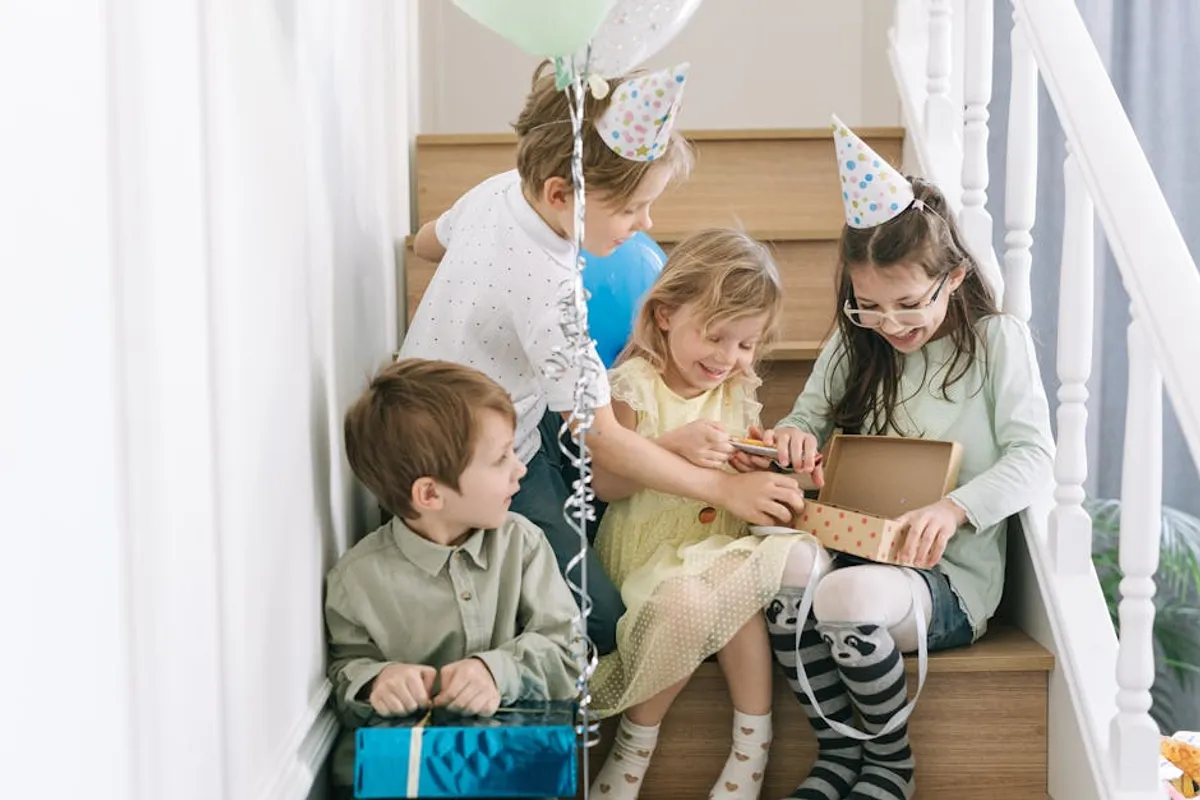
Choosing gifts for children moves beyond simply picking an item; it requires understanding developmental stages, engagement potential, and practical considerations to ensure the present resonates and provides lasting value. This guide compares various gift categories and types, detailing their benefits and suitability across different age groups, to inform a more strategic selection process. The aim is to move past transient trends and focus on gifts that support growth, curiosity, and sustained interest, providing a framework for evaluating options based on concrete attributes rather than fleeting appeal. This guide aims to provide a framework for evaluating options based on concrete attributes, helping you achieve a more strategic selection process.
Navigating Age-Appropriate Gift Categories
Infants and Toddlers (0-3 years)
For this age group, gifts prioritize sensory exploration, gross and fine motor skill development, and early cognitive connections. Items should be safe for mouthing, easy to grasp, and robust enough to withstand repetitive interaction. Soft blocks, stacking rings, and simple shape sorters encourage hand-eye coordination and spatial reasoning. Push-and-pull toys support emerging mobility and balance. Board books with high-contrast images or varied textures introduce early literacy and tactile experiences. The emphasis here is on fundamental discovery through direct interaction with physical objects, fostering basic understanding of cause and effect.
Preschoolers (3-5 years)
Preschoolers are entering a phase of imaginative play and social learning. Gifts that facilitate role-playing, creative expression, and basic problem-solving are particularly effective. Art supplies like chunky crayons, washable paints, and large paper sheets promote fine motor control and self-expression without requiring intricate precision. Dress-up clothes and play kitchens encourage narrative development and social interaction, allowing children to mimic adult roles and explore different scenarios. Simple puzzles with larger pieces, construction sets with fewer components, and matching games support early logical thinking and pattern recognition. The commercial utility lies in gifts that offer open-ended play, extending engagement beyond initial novelty.
Early Elementary (5-8 years)
Children in early elementary are developing more complex cognitive abilities and social skills. Gifts that challenge them constructively and encourage skill acquisition are beneficial. Construction sets with more intricate instructions, such as those involving gears or basic mechanics, build problem-solving capabilities and persistence. Science kits introducing fundamental concepts like magnetism or simple circuits foster curiosity and analytical thinking. Chapter books tailored to their reading level expand vocabulary and comprehension. Board games requiring strategy or turn-taking enhance social skills and logical reasoning. Gifts for this age group should balance structured learning with opportunities for independent exploration.
Upper Elementary and Tweens (8-12 years)
This age range often involves developing specific interests, hobbies, and a greater capacity for complex projects. Gifts should align with emerging passions and offer opportunities for mastery. Advanced building kits, model making, or robotics sets cater to engineering and design interests, requiring sustained focus and precision. Strategy games with deeper rule sets or cooperative play elements enhance critical thinking and teamwork. Entry-level electronics, such as basic coding kits or digital creation tools, introduce technological literacy in an accessible format. Gifts that allow for customization, collection, or ongoing project work tend to maintain engagement for longer periods, providing a greater return on investment in terms of sustained interest.
Comparing Gift Types by Developmental Impact
Creative & Artistic Gifts
These gifts, ranging from comprehensive art sets to musical instruments and craft kits, directly support fine motor skill development, self-expression, and divergent thinking. A quality art set with varied mediums encourages experimentation with color, texture, and form. Musical instruments, even introductory ones, can develop auditory processing, rhythm, and discipline. Craft kits, particularly those requiring assembly or design, enhance spatial reasoning and the ability to follow instructions while allowing for personal touches. The long-term impact includes fostering an appreciation for aesthetics and providing a non-verbal outlet for emotions and ideas.
Educational & STEM Gifts
Educational and STEM (Science, Technology, Engineering, and Mathematics) gifts are designed to cultivate critical thinking, logical reasoning, and an understanding of scientific principles. Coding robots introduce foundational programming concepts through playful interaction, teaching algorithmic thinking. Chemistry sets allow for safe, hands-on exploration of chemical reactions, promoting scientific inquiry. Engineering toys, such as elaborate construction systems or circuit-building kits, develop problem-solving skills and an intuitive grasp of physics. The value of these gifts lies in their ability to demystify complex subjects and encourage a growth mindset towards learning.
Active & Outdoor Gifts
Gifts that promote physical activity and outdoor exploration are crucial for developing gross motor skills, physical health, and an appreciation for nature. Sports equipment, from soccer balls to basketball hoops, encourages coordination, teamwork, and stamina. Outdoor exploration kits, including binoculars, magnifying glasses, and nature guides, foster observational skills and environmental awareness. Bikes, scooters, and other ride-on toys enhance balance, spatial awareness, and independence. These gifts offer a direct counterpoint to sedentary activities, contributing to overall well-being and providing opportunities for energetic play.
Imaginative & Role-Playing Gifts
Imaginative and role-playing gifts are instrumental in developing social skills, emotional intelligence, and narrative creation. Dollhouses, action figures, and play kitchens provide frameworks for children to construct elaborate stories and scenarios, practicing social interactions and emotional responses. Dress-up costumes allow children to explore different identities and perspectives, enhancing empathy and self-awareness. These gifts are often open-ended, meaning the play is driven by the child's creativity rather than prescribed rules, leading to varied and sustained engagement. They are commercially valuable because they adapt to a child's evolving interests and social understanding.
Pro Tip: Prioritize gifts that offer open-ended play or multiple use cases over single-function novelty items. Open-ended toys, like building blocks or art supplies, allow children to dictate the play, fostering creativity and extending the gift's lifespan significantly. Single-function items often have a short engagement window, quickly losing appeal once their primary purpose is exhausted.
Practical Considerations for Gift Selection
Durability and Safety Standards
When selecting gifts, evaluate materials and construction quality to ensure durability. Toys made from robust plastics, sustainably sourced wood, or reinforced fabrics typically withstand prolonged play. Verify adherence to safety standards, such as ASTM International (formerly American Society for Testing and Materials) or CE marking, which indicate compliance with health, safety, and environmental protection standards. Small parts warnings for children under three years are critical. Prioritizing well-constructed, certified products minimizes safety risks and ensures the gift lasts, providing better long-term value.
Long-Term Engagement Potential
Consider how long a child is likely to engage with a gift. Gifts that encourage imaginative play, have multiple configurations, or are part of an expandable system (e.g., train sets, modular building blocks) offer greater long-term engagement. Items that grow with the child, such as microscopes with varying magnification levels or art supplies that support increasingly complex techniques, provide sustained interest. The goal is to select gifts that aren't quickly outgrown or discarded, maximizing their utility and the child's continued enjoyment.
Budgetary Planning
Effective gift planning involves balancing cost with value. High-priced items do not automatically equate to higher quality or greater engagement. Evaluate the features, materials, and developmental benefits against the cost. Sometimes, a collection of smaller, complementary items (e.g., a selection of diverse picture books) can offer more varied and sustained engagement than a single expensive toy. Focus on the gift's ability to fulfill its purpose and provide joy or learning, rather than its price tag alone. Avoiding novelty traps—gifts that are popular but lack substance—is key to prudent budgetary allocation.
Optimizing Your Gift Selection Process
A deliberate approach to selecting children's gifts yields more impactful outcomes. Begin by observing the child's current interests, preferred play patterns, and developmental milestones. This direct insight is more reliable than general age recommendations. Next, consider the gift's capacity for open-ended play, its durability, and how it aligns with educational or creative goals. Evaluate whether the gift encourages independent exploration or collaborative interaction. Finally, assess the long-term engagement potential, favoring items that can adapt to evolving interests or offer opportunities for skill mastery. This systematic evaluation ensures a thoughtful, effective gift choice every time.
Frequently Asked Questions
How do I choose a gift that won't be quickly forgotten?
Focus on gifts that offer open-ended play, encourage creativity, or align with a child's specific, developing interests. Items that allow for customization, building, or imaginative storytelling often hold attention longer than single-function toys.
What are the key safety considerations for children's gifts?
Always check for age recommendations, small parts warnings, and certifications like ASTM or CE marking. Ensure materials are non-toxic and construction is sturdy, with no sharp edges or pinch points.
Should I prioritize educational value over entertainment?
The most effective gifts often blend both. Gifts that are inherently fun while subtly teaching a skill or concept (e.g., strategy board games, science kits) provide both entertainment and developmental benefits without feeling like a chore.
How can I ensure a gift is truly age-appropriate?
Beyond manufacturer guidelines, observe the child's current abilities and interests. A gift is age-appropriate if it challenges them slightly without being frustrating, allowing for gradual skill development and sustained engagement.